
The views expressed in this article are solely those of the author and should not be attributed to the European Payments Council.
Javier Santamaría recently concluded his tenure as Chair of the EPC following more than a decade of leadership. With a deep involvement dating back to the organisation’s founding in 2002, he has played a central role in shaping the evolution of payments across Europe. In this interview, he reflects on key milestones, notable achievements, and the challenges and opportunities that lie ahead for the European payments landscape.
You have served as Chair of the EPC since June 2012 and have been involved since its founding in 2002. How would you describe the key transformations in the European payments landscape over these years?
When I first got involved with the EPC back in 2002, payments in Europe were a bit like a patchwork quilt – beautiful in its diversity but not exactly seamless. Fast forward to today, and we’ve stitched together a far more cohesive masterpiece thanks to the tireless cooperation of countless professionals across the continent. The Single Euro Payments Area (SEPA) was the game-changer, harmonising payments across borders so that sending money from Lisbon to Ljubljana feels as effortless as texting a message. We’ve seen the rise of instant payments, which, let’s be honest, make us all feel a bit like superheroes – zap, your money’s there! Digital wallets and mobile apps have turned our phones into financial Swiss Army knives, while fintechs have kept banks on their toes, sparking innovation at a pace that would make even the genie of the lamp jealous.
But the real magic? It’s been the collaboration – banks, fintechs, regulators, and even some cantankerous officials – working together to make payments faster, safer, easier, and, frankly, a lot more fun.
What do you consider the most important achievements of the EPC under your leadership?
Oh, picking a favourite achievement is like choosing your favourite dessert – impossible without offending the tarte Tatin! But if I must, I’d point to the rollout and evolution of SEPA as our crowning jewel. Under my watch, we’ve not only expanded its reach but also made it more robust, like upgrading from Stephenson’s locomotive (the “Rocket”!) to a high-speed train. The launch of the SEPA Instant Credit Transfer (SCT Inst) scheme in 2017 was a proud moment too, because who doesn’t love paying for coffee (or tea) before the barista even finishes steaming the milk (or adding the right splash of milk for your tea)? We’ve also fostered a spirit of inclusion, bringing diverse voices to the table from small cooperative banks to fintech disruptors, ensuring everyone gets a say in shaping Europe’s payment future. None of this was a solo act, mind you – it’s the result of thousands of professionals across Europe saying, “Let’s make this work!” I’ve just been the lucky one holding the baton for this brilliant orchestra where musicians are far more talented than the conductor.
How do you assess the current state of digital payments in Europe? What are the main priorities for their future development?
The state of digital payments in Europe? It’s like a teenager – full of energy, occasionally chaotic, but brimming with potential. We’ve got world-class infrastructure with SEPA and instant payments, and Europeans are swiping, tapping, and scanning like there’s no tomorrow. But let’s not pat ourselves on the back too hard (better this warning than the one from the Wolf in Pulp Fiction, isn’t it?) – there’s work to do. Cybersecurity is the grumpy bouncer at the party; we need to keep it vigilant to protect against fraud and data breaches. Interoperability is another priority – our systems need to chat with each other as smoothly as old friends over coffee (or tea). And let’s not forget inclusion – ensuring everyone, from tech-savvy Gen Z to your tech-averse uncle (without forgetting the neglected Gen X), can use digital payments with ease. Looking ahead, we need to double down on collaboration to integrate emerging tech like AI and blockchain because sooner rather than later the Internet of Things and machine-to-machine payments will explode. But we must not turn the payments landscape into a sci-fi movie set (remember Blade Runner, enjoying flying cars but also stuck with telephone booths?). Oh, and let’s keep it green – sustainable payments are the cool new kid on the block.
What advice would you offer your successor as Chair of the EPC?
I wouldn’t dare give a piece of advice, as I’d rather subscribe to Michel de Montaigne’s attitude, “I am not teaching, I am relating,” but, to my successor, I’d say: buckle up, it’s a wild ride, but you’re in for a treat! First, listen more than you speak – Europe’s payments community is a treasure trove of ideas, and the best ones often come from unexpected corners (yes, even in this realm there are positive unknown unknowns). Second, keep the coffee strong (and the tea hot: always be versatile!) and the humour stronger – because when you’re navigating complex regulations or heated debates, a good laugh (or a SEPA Christmas Quiz) is worth its weight in gold. Third, lean on the power of “we”. The EPC thrives on cooperation, so build bridges, not walls, and remind everyone we’re on the same team. Finally, don’t try to predict the future – just be ready to surf the wave when it comes. Oh, and one last tip: always reserve time to share some beer with colleagues after those endless meetings. Trust me, it’s a lifesaver!
What major trends or developments do you expect will drive the evolution of the European payments landscape over the next ten years?
Didn’t I say predicting the future is hopeless? Predicting the next decade in payments is like trying to guess the plot of a sci-fi blockbuster – exciting, but you know there’s a twist coming! I see a few trends stealing the spotlight. First, instant payments will become the norm, not the exception – because waiting for money to clear will feel as outdated as a flip phone. AI will play a starring role, not just in fraud detection but in personalising payments, making them as tailored as a bespoke suit. Open banking will mature, turning data into a superpower for consumers and businesses alike. And let’s not ignore digital currencies – whether it’s a central bank digital euro or tokenised assets, they’ll add some serious spice to the mix. Sustainability will also take centre stage, pushing us toward greener payment systems.
The key? Collaboration will remain the glue that holds it all together, ensuring Europe stays ahead of the curve without tripping over its own shoelaces.
¡Hasta la vista, baby!
Your reactions
If you would like to comment on this article, please identify yourself with your first and last name. Your name will appear next to your comment. Email addresses will not be published. Please note that by accessing or contributing to the discussion you agree to abide by the EPC website conditions of use.
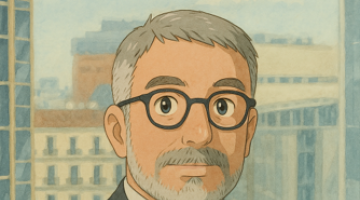
Javier Santamaría
Javier Santamaría has chaired the European Payments Council (EPC) for 13 years and has been a member since its founding 23 years ago. With decades of experience at Banco Santander, where he served as Senior Vice President and Head of Operations and Business Services, he has developed deep expertise across all aspects of payments – business, operational, technical, and regulatory.
Now working independently since 2017, Mr Santamaría remains active in the payments sector. He is Chair of the Iberpay board, a member of the board of the Global Legal Entity Identifier Foundation, and of the supervisory board of Western Union International Bank. He's also a former board member of both SWIFT and the Euro Banking Association.