
The views expressed in this article are solely those of the author and should not be attributed to the European Payments Council.
We spoke with Gent Sejko, Governor of the Bank of Albania (BoA), about Albania’s journey toward Single Euro Payments Area (SEPA) membership, the digital transformation of its payment ecosystem, and the growing role of innovation and financial inclusion in shaping the country’s economic future. He also shared insights into how these developments support Albania’s European Union (EU) integration agenda and create new opportunities for consumers, businesses, and cross-border cooperation.
How would you describe the key features of Albania’s current payment landscape and any notable changes in recent years?
The payments ecosystem in Albania has undergone a substantial transformation in the last decade, primarily fuelled by changes in legislation with the transposition of the Payment Services Directive 2 (PSD 2), the penetration of digital services, and the arrival of new actors. New innovative players have introduced payment solutions that are more convenient and cost-effective, fostering increased competition. To adapt to this shift, investments in payment infrastructure have further enhanced the efficiency of payments for businesses and consumers.
Commercial banks dominate the payments market by providing three-quarters of the total volume of retail payments, but the importance of nonbanks in the retail payments market is increasing. Card payments are currently the most preferred means of retail payments by households, thus making a substantial contribution to a rapid increase in electronic payments. The number of yearly electronic payments per adult has increased six times, while financial inclusion measured by access to a payment account has doubled in the last decade.
The expansion of the payment market was also supported by developing infrastructures which offer availability, efficiency, and safety. The BoA has introduced a direct debit scheme based on the SEPA standards and, additionally, implemented an interbank system for domestic euro transfers which is proving beneficial for customers both in terms of costs and time. We recently began the process of upgrading our national payment systems to ISO 20022, aiming to improve safety and interoperability.
The most recent milestone was reached in November 2024 when Albania became part of the SEPA geographical scope. This was the culmination of the considerable progress we had made in aligning our payment legislation with Europe and transforming the payment landscape. As of May 2025, all Albanian banks are registered participants in the SEPA scheme, ready to be operational by 7 October.
What advantages do you predict will come from Albania becoming part of the SEPA geographical scope?
SEPA schemes are considered the benchmark of payment standards in Europe, and participation is important on many levels. First, it fosters efficient and reliable payment systems for small countries like Albania. By standardising cross-border payments and employing advanced technology, it will be possible to create a more modern payment market in line with European policies, and to increase the penetration of information technology. Second, participation in SEPA is expected to boost trade. Albania’s main trading partner is the EU, with more than half of trade in goods and services routed there. Third, SEPA will not only help formalise remittances but also increase savings and the welfare of families that rely on them. Last, but not least, it means all European visitors will experience similar costs, time, and safety for payments as they would in their home countries.
Have the Albanian Central Bank or government measured the economic impact of inclusion in SEPA? What quantitative benefits are anticipated?
The immediate benefit is a reduction of costs in making cross-border payments with European counterparts, be they business entities or households. We have estimated that savings from the cost of transfers within SEPA will be at least twenty million euros in the first year of operation.
On top of that, eighty percent of around one billion euros of remittances are from the SEPA zone, which are currently made using payment rails that cost five to six percent of the transactions’ value. These costs are expected to reduce at least five-fold when using SEPA schemes. Furthermore, we believe that the benefits from SEPA are amplified by the advantages of having access to a bigger market, easier movement of capital as well as the advantages of being able to meet the objectives under the Growth Plan. An expected shift in consumer behaviour towards digital payments and an increase in financial inclusion are also part of the added value chain. Once these channels are functional and more data become available, we will have further quantitative estimates on the benefits of SEPA. Certainly, these advantages will feed into overall economic growth and make an important contribution to our GDP.
How have electronic payment methods – such as mobile payments, e-wallets, and online banking – evolved in Albania, and what impact are they having on consumer behaviour and financial inclusion?
In 2018 the World Bank helped Albania adopt a strategy for the modernisation of payment systems and instruments starting from very low levels of financial inclusion1 through the promotion of innovation, digitalisation, and competition in the market. The new rules, players, and services contributed to an increase of 4.6 times in electronic payments per capita in six years. Now seventy-eight percent of the adult population has at least one bank account, up from forty percent in 2017. The value of cashless payments accounts for roughly two and a half times the country’s GDP. This illustrates the expansion of financial inclusion in the population and growth of formalisation in the economy. Apart from the new Electronic Money Institutions (EMIs), traditional banks have also shown a proactive role in driving the use of electronic payments, with a considerable increase in accounts accessed through the internet (around forty percent).
Even though these figures are significantly behind other parts of Europe, we are sure that participation in SEPA schemes will provide an important boost for digital payments in Albania.
How do you see the Albanian payments sector developing in the near future?
One of the main objectives for Albania, at least until 2030, is full alignment with the EU acquis in the framework of our EU integration agenda. Our other immediate objective is the establishment of an instant payment system that possibly develops cross-border instant payments within the region, and participation in TARGET Instant Payment Settlement (TIPS). The trend of increasing the use of electronic payments and reduction of cash will continue as the country becomes more accessible to EU markets. We expect financial inclusion and education to expand as we continue to promote financial and digital literacy programmes.
1 https://www.bankofalbania.org/rc/doc/NRPS_update_3July2018_12078.docx
Your reactions
If you would like to comment on this article, please identify yourself with your first and last name. Your name will appear next to your comment. Email addresses will not be published. Please note that by accessing or contributing to the discussion you agree to abide by the EPC website conditions of use.
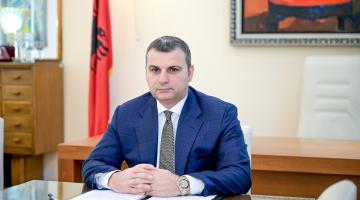
Gent Sejko
Gent Sejko has over three decades' experience in central banking, financial markets, and macroeconomic policy. He has been the Governor of the Bank of Albania and Chairman of its Supervisory Council since 5 February 2015. He also serves as Albania’s Governor at the International Monetary Fund (IMF) and MIGA (World Bank Group) while being an active member of several international financial bodies, including the Central Bank Governors' Club of Central Asia, Black Sea Region, and Balkan Countries. He is Co-chair of the Albanian Financial Stability Advisory Group. His earlier career spanned senior leadership roles at the Bank of Albania, international auditing firms, and key executive positions in prominent Albanian commercial banks. Prior to his appointment as Governor, he was Deputy General Manager at Société Générale Albania.