
The views expressed in this article are solely those of the author and should not be attributed to the European Payments Council.
We spoke with Igor Velichkovski of the National Bank of the Republic of North Macedonia about the country’s successful journey towards joining the Single Euro Payments Area (SEPA), the transformation of its payment landscape, and the growing influence of digitalisation and innovation.
Can you describe the Republic of North Macedonia’s payment landscape and recent notable changes?
North Macedonia’s payment system has traditionally been bank-centric but in recent years it has undergone a profound transformation. Regulatory reform, combined with the adoption of technological innovations, has been the principal catalyst for reshaping the national payments ecosystem. The transposition of several key EU directives and regulations – such as the Payment Services Directive 2 (PSD2), the Payment Accounts Directive (PAD), the Interchange Fee Regulation (IFR), and the SEPA Regulation – has created a robust legal foundation for greater competition, enhanced efficiency, improved transparency, and stronger consumer protection. This harmonised framework, aligned with the EU acquis, has encouraged the entry of non-bank payment service providers (PSPs), who are expected to deliver innovative and cost-effective solutions for everyday transactions.
Cashless instruments are experiencing rapid growth, with card payments and mobile transfers increasingly becoming the norm for consumers. Point-of-sale acceptance continues to expand, especially in the domain of e-commerce, facilitating a marked shift from physical retail to online shopping. The surge in mobile-initiated transactions reflects consumers’ preference for speed and convenience, while the regulatory reform, including strong customer authentication, ensures security and trust in digital payments. Collectively, these developments underscore an irreversible trend towards digitalisation.
In March 2025, the EPC approved the inclusion of North Macedonia in SEPA. What advantages do you foresee?
North Macedonia’s accession to SEPA constitutes a landmark in the country’s EU integration trajectory. The advantages are evident in terms of trade and remittance flows. First, the cost and time required for euro-denominated transfers will fall dramatically. Given that ninety-three percent of 2024 cross-border transactions were in euros, SEPA will allow a large share of these to be processed as if domestic.
Second, with seventy-seven percent of North Macedonia’s international trade conducted with SEPA countries, SEPA membership removes structural frictions and strengthens the competitiveness of domestic enterprises. For households and the diaspora, cost savings on personnel transfers and compensation of employees – currently accounting for almost fourteen percent of GDP – translate directly into increased disposable income and improved household welfare.
Third, SEPA integration modernises the country’s financial infrastructure, aligning it fully with EU standards and enhancing resilience. This will benefit banks, non-bank PSPs, and the central bank alike, while simultaneously reinforcing North Macedonia’s strategic orientation towards EU membership.
Have the National Bank of the Republic of North Macedonia or government measured the economic impact of inclusion in SEPA?
The most immediate and tangible benefit lies in the sharp reduction of fees for cross-border euro payments with SEPA counterparts. The nine domestic banks that will become SEPA operational from October have already announced new tariff structures that illustrate the scale of these savings. For citizens, sending five hundred euros to SEPA destinations will be, on average, six times cheaper for digital payments, while the cost of receiving such transfers will be halved compared with correspondent banking channels.
The benefits are even more pronounced for enterprises. Sending twenty thousand euros to a SEPA counterparty will, on average, cost eight times less than under the current system, while receiving the same amount will be roughly one third of today’s costs. Over time, these cost savings will accumulate into significant competitive advantages, boosting trade, facilitating investment, and ultimately supporting stronger economic growth. SEPA thus delivers not only micro-level gains for households and firms but also macroeconomic benefits by improving efficiency across the economy.
How have electronic payment methods – such as mobile payments, e-wallets, and online banking – evolved in North Macedonia, and what impact are they having on consumer behaviour and financial inclusion?
The adoption of electronic payments in North Macedonia has accelerated markedly in recent years. Between 2019 and 2024, electronic credit transfers initiated by citizens doubled, while those initiated via mobile phones expanded fivefold – a clear testament to consumers’ preference for seamless, device-based payment solutions.
This behavioural shift has supported financial inclusion. According to the World Bank’s 2024 Findex Database, eighty-four percent of the adult population held at least one bank account, the highest ratio in the Western Balkans. Nevertheless, challenges remain. Digital literacy gaps and affordability constraints must be addressed to ensure that inclusion is not only widespread but also equitable across demographic groups. SEPA accession is expected to accelerate this momentum, further incentivising the adoption of digital payments and enhancing the inclusivity of the financial system.
How do you see the Macedonian payments sector developing in the near future?
Looking ahead, the payments sector is poised for dynamic innovation and deeper EU integration. Fintech firms are expected to roll out new products leveraging the open banking framework, while transaction pricing for cross-border euro payments will converge with EU norms. A critical driver of this evolution will be the imminent launch of the central bank’s instant payments platform (the TARGET Instant Payment SETTLEMENT or TIPS Clone), designed to interconnect with comparable systems across the Western Balkans and with the euro system’s TIPS. This will allow households and enterprises to execute payments seamlessly, instantly, and at low cost across borders.
Over the medium term, North Macedonia’s payments landscape will become more competitive, innovative, and inclusive, offering fully interoperable services aligned with EU standards. Thus, SEPA accession is a strategic step that reinforces the country’s integration with the EU and the broader European financial system.
Your reactions
If you would like to comment on this article, please identify yourself with your first and last name. Your name will appear next to your comment. Email addresses will not be published. Please note that by accessing or contributing to the discussion you agree to abide by the EPC website conditions of use.
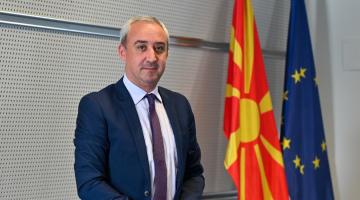
Igor Velichkovski
Igor Velichkovski has more than 25 years’ professional experience in monetary policy implementation, financial markets, and payment systems. Since 2024, he has served as Director of Sector at the national bank, with responsibility for financial market operations,payment systems, payments and back-office operations, finance, accounting, and control. Igor Velichkovski has played a pivotal role in the transposition and implementation of key EU regulations in the payments area into North Macedonia’s legal framework. He has been particularly instrumental in guiding North Macedonia’s integration into the SEPA.