
The views expressed in this article are solely those of the author and should not be attributed to the European Payments Council.
We spoke with Anca Dragu, Governor of the National Bank of Moldova, about the country’s successful accession to the Single Euro Payments Area (SEPA), the modernisation of its payment ecosystem, and how these developments are fostering financial inclusion, innovation, and closer European Union (EU) integration.
Can you describe Moldova’s current payment landscape and recent notable changes?
Moldova’s payment landscape has undergone a strong shift toward non-cash transactions via the increasing use of payment cards, mobile applications, and online platforms. The 2024 launch of the MIA instant payments system enabled real-time transfers at very low or no cost. Using phone numbers as identifiers, the system allows peer-to-peer transfers through request-to-pay (RTP) functionalities or QR codes. This innovation has made daily transactions faster and more convenient for both individuals and businesses. Meanwhile, the introduction of Person to Government (P2G) payments has simplified and accelerated transactions with public institutions and authorities. Today, MIA is widely available and actively used in both urban and rural communities. One in three Moldovan citizens have used MIA at least once.
Moldova’s payment ecosystem is now aligned with the EU regulatory framework, ensuring both compliance and international interoperability. Moldova’s 2025 accession to SEPA marked a further step in integrating its financial infrastructure with Europe, facilitating smoother euro transactions. Although cash remains important – particularly in rural areas and among older generations – the country’s high level of digital readiness reveals strong potential for advancing digital inclusion. The National Bank of Moldova, in cooperation with the government, key public financial institutions, and non-governmental partners, is developing the first National Financial Inclusion Strategy to broaden access to financial services, upgrade infrastructure, improve digital literacy, build trust in electronic payments, and ensure robust consumer protection across all population groups.
In March 2025, the EPC approved the inclusion of Moldova in the geographical scope of SEPA. What advantages do you foresee?
Moldova’s accession to SEPA represents a pivotal step in financial modernisation and a closer alignment with the EU. By simplifying cross-border payments and reducing costs, SEPA integration supports trade and investment, strengthens economic ties with European markets, and enhances Moldova’s attractiveness to global investors. It demonstrates financial stability, regulatory alignment, and readiness for deeper economic cooperation. Moldovans living abroad gain from faster and more affordable remittance channels, making it easier to support their families at home.
SEPA also fosters innovation in digital financial services and accelerates the modernisation of Moldova’s payment infrastructure, creating a solid platform for broader economic integration.
Have the National Bank of Moldova or government measured the economic impact of SEPA inclusion?
Moldovan consumers and businesses can now execute rapid, secure, and cost-effective euro transfers under the same terms as those within the EU. For instance, in 2024, approximately 830,000 euro transactions (11.8 billion euros total) were made via SWIFT to and from SEPA countries. This means that daily, around 3,200 transactions are conducted, with a total value exceeding forty-five million euros. These volumes highlight the growing integration of Moldova’s economy with the European financial system.
The immediate economic impact is substantial: Moldova will save around twenty million euros from reduced fees and greater efficiency. The resources retained in the national economy may be redirected towards business growth and investment, fostering broader economic expansion and strengthening long-term financial resilience.
How have electronic payment methods – such as mobile payments, e-wallets, and online banking – evolved, and what impact are they having on consumer behaviour and financial inclusion?
Electronic payment methods have expanded rapidly in Moldova in recent years. In the first quarter of 2025, the value of cashless payments surpassed that of cash withdrawals for the first time in the country’s history. Mobile payments and online banking services have gained wide popularity, making transactions faster, safer, and more convenient. These advancements have driven a notable shift in consumer behaviour, with increasing preference for digital alternatives over cash. The transition has also supported financial inclusion, especially among younger and urban populations, by widening access to financial services and lowering barriers such as distance and cost.
Over the last five years, the number of cards has more than doubled. At the end of 2024, the number of cards issued by domestic PSPs amounted to 3.29 million. The average number of payment cards reached 1.5 per capita in 2024, an impressive milestone that brings the Republic of Moldova closer to the European area benchmark of two payment cards per capita. Virtual card adoption in Moldova is also rapidly increasing by 118.7 percent compared to 2023. Currently there are six electronic money issuing companies. In 2024, they carried out three and a half million e-money payments or 147.8 million euros, registering a sharp rise of sixty-five percent year on year. By June 2025 there were 236,000 electronic money accounts with a total balance of 1.09 million euros. Active mobile and internet apps grew by 22 percent from 1.24 million to 1.52 million year on year.
How do you see the Moldovan payments sector developing in the near future?
Moldova’s payments sector will maintain its rapid digital expansion, driven by innovation and the growing adoption of cashless solutions.
SEPA integration and instant payments will further enhance convenience and security, while open banking will stimulate competition by allowing third-party providers to deliver new services.
Sustained policy initiatives and regulatory support will remain essential in fostering financial inclusion, building public trust, and ensuring that digital services are fully accessible.
Overall, Moldova’s payment ecosystem is evolving towards greater efficiency, inclusiveness, and interoperability with international standards: a foundation for long-term economic growth and deeper European integration.
Your reactions
If you would like to comment on this article, please identify yourself with your first and last name. Your name will appear next to your comment. Email addresses will not be published. Please note that by accessing or contributing to the discussion you agree to abide by the EPC website conditions of use.
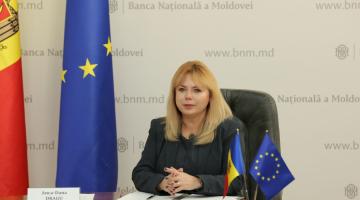
Anca Dragu
Anca Dragu was appointed by the Parliament of the Republic of Moldova in December 2023. She is the first woman to hold the position, with 28 years’ experience in economics, finance, banking, and public service. For over a decade, Anca Dragu worked with the International Monetary Fund and the European Commission's Directorate-General for Economic and Financial Affairs. In addition to her roles in economics, she is also an associate professor at the Academy of Economic Studies in Bucharest, where she teaches macroeconomics and finance. Anca Dragu is a published author with several scientific papers in both national and international journals.